Seeing Machines launches Physical AI Platform to power the next generation of humanoid robots
New platform builds on proven automotive leadership to enable safe, intuitive human-machine interaction
CANBERRA, Australia, Aug. 17, 2026 /PRNewswire/ -- Seeing Machines Limited (AIM: SEE), the advanced computer vision company that has helped redefine transport safety through AI-powered human sensing, today announced the launch of its Physical AI Platform. The platform applies the Company's Human-Centred AI design philosophy to robotics and industrial automation.
The announcement marks an important milestone in the company's evolution, building on more than 25 years of human factors research and AI innovation that has helped make roads safer around the world.
Seeing Machines' Driver and Occupant Monitoring System (DMS/OMS) technology is deployed in more than eight million vehicles globally, helping vehicles understand drivers, anticipate risk and prevent accidents. The Company is now applying the same Human-Centred AI philosophy to give robots the contextual awareness needed to interact safely and intuitively with people in complex real-world environments.
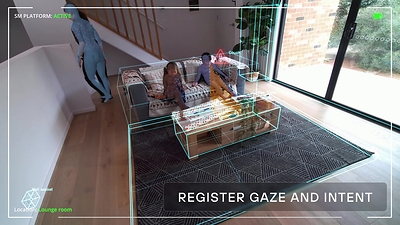
The Seeing Machines Physical AI platform gives robots a deeper understanding of the situation around them by creating a dynamic three-dimensional perception map of people, objects and their environment. Rather than simply recognising individual features, it continuously builds contextual awareness that enables robots to understand spatial relationships, interpret human behaviour, anticipate risk and make safe and intuitive decisions in real time.
Paul McGlone, Chief Executive Officer of Seeing Machines, said the launch is a natural evolution of the company's long-standing mission to solve for complex human-machine interaction.
"For more than two decades, we've been teaching machines to understand people," said McGlone.
"Our technology is already protecting millions of drivers around the world by enabling vehicles to better understand human behaviour and respond to risk in real time. With the launch of our Physical AI Platform we are extending that capability into robotics, enabling machines to interact with people safely, naturally and intuitively.
"As robots begin moving beyond research labs and into factories, workplaces, hospitals, homes and public spaces, understanding people and the environment they're in becomes just as important as understanding the task they're performing. We believe our Human-Centred AI design philosophy will extend into a foundational capability for the next generation of robotics," he said.
Unlike conventional AI systems focused on recognising individual objects or executing predefined tasks, Seeing Machines' technology interprets people, objects and the surrounding environment as a unified scene. This contextual understanding gives robots the situational awareness required to operate safely alongside people in dynamic and unpredictable environments.
The platform has potential applications across a broad range of industries, including manufacturing, logistics, healthcare, aged care, warehousing, mining and industrial automation, where robots are increasingly expected to work collaboratively with people.
Additional Resources:
- Launch video demonstrating the Physical AI Platform
About Seeing Machines (AIM: SEE): Seeing Machines is a global technology company founded in 2000 and headquartered in Australia, pioneering Human-Centred AI that enables machines to understand people and the environments in which they operate. Combining more than 25 years of Human Factors research with advanced AI, the company develops Safety AI technology that helps machines anticipate risk, make safer decisions in real time, and enable more natural, intuitive human-machine interactions. Its technology combines AI algorithms, embedded processing and optics to deliver reliable, real-time understanding of human behaviour, attention, and cognitive state. Building on its global leadership in vision-based monitoring and Driver Monitoring Systems (DMS), Seeing Machines is extending its expertise across automotive, commercial transport, aviation, robotics and industrial automation through its Cabin AI, Cockpit AI and Physical AI platforms. Seeing Machines has offices in Australia, the USA, Europe and Asia and supplies technology solutions and services to industry leaders globally.
Contact:
Sophie.Nicoll@seeingmachines.com

 View original content to download multimedia:https://www.prnewswire.co.uk/news-releases/seeing-machines-launches-physical-ai-platform-to-power-the-next-generation-of-humanoid-robots-302852668.html