TrinaTracker Launches Two Robots to Expand its Smart PV Ecosystem
CHANGZHOU, China, Sept. 24, 2026 /PRNewswire/ -- TrinaTracker, a global provider of smart tracking systems and a wholly owned subsidiary of Trina Solar Co., Ltd. (SHA: 688599), has launched two self-developed robotic products: BUILDEX PV Module Installation Robot and AURORA PV Cleaning Robot, to expand its Smart PV Ecosystem.
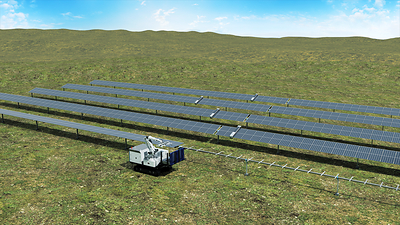
Since the beginning of the year, TrinaTracker has transformed from a tracking system equipment supplier into a Smart PV and Robotics Solution Provider. By integrating high-reliability trackers, AI algorithms, installation and cleaning robots, as well as engineering and intelligent operations services, the company delivers a full lifecycle solution for PV power plants by optimizing plant design, improving construction and O&M quality, and reducing operational costs.
BUILDEX PV Module Installation Robot: Breaking Construction Bottlenecks
Large-scale PV projects have traditionally relied heavily on manual module installation, resulting in heavy labor input, long construction cycles, high costs, inconsistent installation precision and safety risks, hindering barriers to standardized rollout. BUILDEX reshapes PV construction through automated, standardized and intelligent workflows.
Powered by high-precision AI vision positioning and integrated precision mechanical control systems, BUILDEX autonomously completes module picking, transportation, alignment and placement. It adapts to complex terrain and diverse tracker layouts, reducing labor intensity and safety risks while improving installation accuracy and delivery speed for large-scale solar bases.
- Millimeter-level visual perception for precise construction: Equipped with industrial 3D cameras and AI vision algorithms, the robot identifies modules and structure to achieve millimeter-accurate alignment and standardized laying. A LiDAR-AI multi-sensing safety system prevents on-site risks.
- Automation sets new efficiency benchmarks: The robot installs up to 90 modules per hour, 3–4 times faster than manual labor. Its innovative fork-and-flip mechanism supports automatic feeding and is compatible with both landscape and portrait mounting, streamlining material handling and site schedules.
- Wide compatibility for complex terrain and trackers: The height-adjustable robotic base works with fixed and tracking brackets as well as 1P/2P modules. With 17° platform levelling capability, it operates reliably on sloped land and expands viable construction scenarios.
- Round-the-clock operation to cut capital costs: Free from human fatigue and weather limitations, BUILDEX runs continuously to shorten installation cycles, reduce manpower and lower overall construction costs.
AURORA PV Cleaning Robot: Safeguarding Energy Yield and Enabling Refined Smart O&M
PV plants operate under harsh outdoor conditions. Dust and stains on module surfaces block sunlight and reduce power generation, undermining long-term plant revenue. Conventional manual cleaning is constrained by terrain, weather, labor and safety risks, making it unsuitable for large-scale refined O&M. AURORA delivers unmanned, non-damaging, regular and intelligent cleaning to maintain module cleanliness, boost power output, lower long-term O&M costs and unlock asset value.
- Self-correcting intelligent algorithms for tough sites: Powered by high-performance hardware and proprietary self-correction algorithms, AURORA overcomes height offsets of up to 50 mm to sustain continuous cleaning on complex sites.
- Autonomous route planning with active risk avoidance: Drawing real-time data from the plant, trackers and environmental sensors, it generates optimal cleaning plans and takes proactive safety measures.
- Self-powered operation for closed-loop regular O&M: Powered by PV modules with self-cleaning functions, it performs unattended cyclic cleaning, reducing routine management workload and expenses.
Combining AI & Robotics: Redefining PV Asset Value
TrinaTracker's investment in AI and robotics is not merely hardware iteration, but a strategic upgrade of its full-stack "Tracker+" smart energy ecosystem. AI serves as the digital brain for robotic hardware, connecting construction automation and routine O&M. Physical PV assets are coupled with digital twins to help plant owners lower LCOE and maximize asset value.
Global operational data from TrinaTracker's worldwide portfolio fuels continuous AI algorithm optimization, equipping its robots with strong adaptability for complex terrain, extreme weather and dynamic structural conditions. Robot data integrates with Trina's digital platform to create a new model of fully automated, intelligent PV plant management.
The rollout of AI robotic products marks a key milestone in TrinaTracker's transformation from "equipment leadership" to "digital & intelligent leadership". Moving forward, TrinaTracker will continue advancing PV intelligence, enriching its robot portfolio and deepening AI integration across PV scenarios to refine the "Tracker+" ecosystem. The company will deliver all-in-one smart PV solutions to accelerate global solar development and support clean energy transition and carbon neutrality goals.
 View original content to download multimedia:https://www.prnewswire.co.uk/news-releases/trinatracker-launches-two-robots-to-expand-its-smart-pv-ecosystem-302889017.html