SCANOLOGY Sets New Benchmarks in Large-Scale and Portable 3D Measurement with TrackScan Sharp-Z and TrackScan GO
HANGZHOU, China, Sept. 4, 2026 /PRNewswire/ -- SCANOLOGY, a global provider of 3D scanning and inspection solutions, has introduced TrackScan Sharp-Z and TrackScan GO, two optical 3D scanning systems designed to make industrial inspection more mobile, accessible, and adaptable to different working environments.
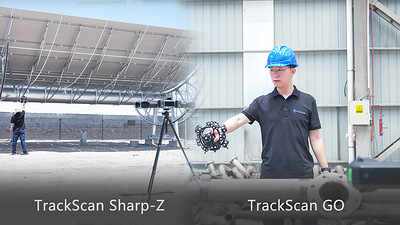
The new systems enable manufacturers to deploy 3D measurement more efficiently on the site, whether inspecting oversized structures or moving between production areas and confined spaces. Together, the systems reflect SCANOLOGY's focus on combining measurement capabilities with simpler deployment and operation.
For large-scale applications, TrackScan Sharp-Z offers a tracking distance of up to 12 meters. Its Fully Self Tracking technology automatically rotates the tracker to follow the 3D scanner, reducing the need for repeated repositioning when inspecting large components such as aircraft structures, commercial vehicles, and energy equipment.
TrackScan GO addresses portability and versatility. The complete system fits into a single carrying case, while its tracker and scanner can operate together or independently. Three measurement configurations support marker-free optical tracking, wide-area scanning, and handheld inspection in confined spaces.
The measurement performance of both systems is evaluated in accordance with ISO 10360-13.
For teams handling varied inspection tasks, this flexibility can reduce the need to transport separate devices and make it easier to adapt the setup to the workpiece.
Both systems use SCANOLOGY's smart wireless architecture, with edge computing processing camera images before transmitting measurement data. This reduces data transmission requirements and supports cable-free scanning.
Ease of use is another shared priority. TrackScan Sharp-Z combines automatic tracking with dual-screen interaction. A color camera and AR overlay on TrackScan GO help users relate measurement data to the physical workpiece and document visible surface defects on the 3D model.
Both systems operate on SCANOLOGY's unified industrial measurement software platform, supporting a consistent workflow from scanning through analysis and reporting.
Preconfigured routines can also help teams repeat established inspection procedures, reducing manual setup and supporting more consistent reporting across operators working on similar tasks.
By addressing both large-scale coverage and portable deployment, SCANOLOGY aims to help manufacturers extend 3D inspection into more production and field environments while making advanced measurement tools easier to use.
For more information, visit SCANOLOGY's website.
 View original content to download multimedia:https://www.prnewswire.co.uk/news-releases/scanology-sets-new-benchmarks-in-large-scale-and-portable-3d-measurement-with-trackscan-sharp-z-and-trackscan-go-302870040.html