LRQA Sparks Critical Conversations at Melbourne Cybersecurity & AI Governance Roundtable
MELBOURNE, March 6, 2026 /PRNewswire/ -- As cyber threats intensify and AI adoption accelerates, governance has moved firmly into the boardroom. To address this shift, LRQA, a leading global assurance provider, recently brought together senior executives and risk leaders in Melbourne for a strategic roundtable: "Navigating Cybersecurity and AI Governance: Insights from ISO Standards."
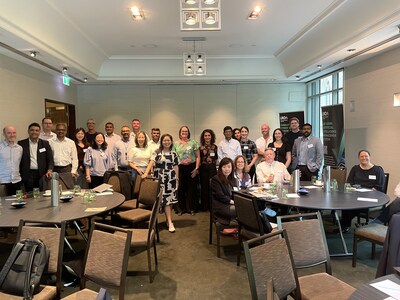
The discussion focused on moving beyond compliance-driven implementation toward embedding standards as strategic enablers. Participants explored how frameworks such as ISO/IEC 42001 (AI management) and ISO/IEC 27001 (information security) provide a practical foundation for managing digital risk without stifling innovation.
Key discussion themes included:
- Lifecycle-based AI risk controls: Embedding governance across AI design, deployment and monitoring.
- Measurable cybersecurity performance: Ensuring metrics provide executives with meaningful, actionable insight.
- Supplier governance: Managing third-party and supply chain exposure with greater rigour.
- Enterprise risk integration: Aligning cyber and AI risks with broader organisational risk frameworks.
Emma Carroll, Business Director for Australia and New Zealand, LRQA, emphasised the strategic shift required: "Digital risk can no longer be managed in silos. Organisations that lead in this environment integrate AI and cybersecurity governance into core business strategy, using standards to drive accountability, transparency and confident innovation."
The session also examined recurring readiness gaps observed across the region, with candid discussion regarding clear accountability for AI decision-making and the importance of sustaining continual improvement beyond initial certification milestones. The consensus among attendees was clear: governance maturity is rapidly becoming a defining characteristic of high-performing, resilient enterprises and a critical competitive differentiator.
In an evolving threat landscape, LRQA continues to support organisations navigating digital transformation through audit, certification, and advisory services across cybersecurity, AI governance, sustainability, and supply chain resilience.
Ready to bridge the gap between compliance and strategy? Discover LRQA's Cybersecurity and AI Governance solutions at Cyber Security Services | LRQA.
About LRQA
From certification and cybersecurity to safety, sustainability and supply chain resilience, LRQA works with clients to identify risks across their business. We design smart, scalable solutions, built around your business – tailored to help you prepare, prevent and protect against risk. Our innovative risk management portfolio helps shape a stronger and more secure future for your business. With decades of sector-specific expertise, data-driven insight and on-the-ground teams across assurance, certification, inspection, advisory and training, we support over 61,000 clients in more than 150 countries. For more information, visit https://www.lrqa.com/
Further information
For more information, please contact:
Hasan Surve
Regional Marketing Manager – APAC, LRQA
hasan.surve@lrqa.com
Image - https://mma.prnewswire.com/media/2927053/LRQA_Roundtable.jpg
Logo - https://mma.prnewswire.com/media/2793312/LRQA_New_Logo.jpg
 View original content to download multimedia:https://www.prnewswire.co.uk/news-releases/lrqa-sparks-critical-conversations-at-melbourne-cybersecurity--ai-governance-roundtable-302705226.html