LG ELECTRONICS SHOWCASES COMPLETE PREMIUM RGB LINEUP WITH TÜV RHEINLAND CERTIFICATION FOR HIGH PURITY COLOR AT IFA 2026
Powered by the α11 AI Processor, LG Micro RGB evo Sets a New Standard for High-Purity RGB Spectrum Display
News Summary:
- LG Electronics showcases Micro RGB evo, an ultra-large LCD TV delivering high-purity RGB color performance, certified by TÜV Rheinland with its 'High Purity RGB Spectrum Display' certification, at IFA 2026.
- LG's award-winning α11 AI Processor[1], recognized for enhancing picture and audio quality, is featured not only in flagship OLED models but also in Micro RGB evo.
- LG expands its RGB display lineup, now extending to Mini RGB evo models for a wider range of customer choice.
SEOUL, South Korea, Sept. 5, 2026 /PRNewswire/ -- LG Electronics (LG) is showcasing LG Micro RGB evo (model MRGB95), a premium ultra-large-screen LCD TV featuring exceptional color purity, at IFA 2026, taking place in Berlin, Germany, from September 4-8. Leveraging LG's proprietary Micro RGB technology and the α (Alpha) 11 AI Processor Gen3, the advanced TV delivers high-purity red, green, and blue separation, earning TÜV Rheinland's High Purity RGB Spectrum Display certification.
Premium LCD Color with Independently Verified RGB Purity
LG Micro RGB evo and Mini RGB evo leverage LG's proprietary high-purity RGB spectrum display technology, enhancing the purity of red, green and blue to deliver more natural and expressive color reproduction. Featuring clear color separation between red, green and blue colors and high purity of each color, the TVs deliver remarkably pure and lifelike colors.
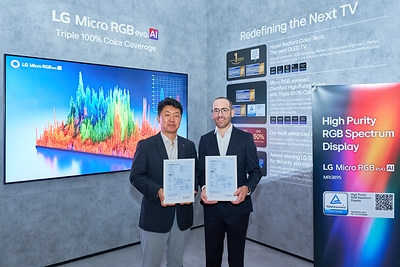
This outstanding color performance has been independently certified by TÜV Rheinland, which has awarded its High Purity RGB Spectrum Display certification to LG's Micro RGB evo MRGB95 and Mini RGB evo MRGB9M and MRGB85 models.[2]
Highlighting the significance of the certification, Hüseyin Derman, Regional Sales Manager of Products Europe at TÜV Rheinland, stated, "The TÜV Rheinland certification confirms that LG's Micro RGB evo has passed a rigorous evaluation of its capacity to deliver physically and optically high-purity colors by completely preventing the intermixing of RGB wavelengths."
Award-winning AI Processing for Pure Color and Precise Contrast
At the heart of Micro RGB evo is the α11 AI Processor Gen3, LG's most advanced smart TV processor and the same platform used in the company's flagship OLED models. The processor's Dual AI Engine analyzes texture and edge simultaneously to produce more cohesive and lifelike images across movies, shows and games.
Precision Color Enhancer, also enabled by the powerful α11 Gen3, preserves the purity of each primary color while enacting fine control over gradation and tonal transitions. Complementing this is Micro Dimming Ultra, which precisely manages brightness across thousands of dimming zones to reveal subtle detail in both deep shadows and bright highlights. These technologies, combined with the immense scale of the Micro RGB evo's screen, create an immersive and impactful viewing experience.
As part of its premium LCD lineup strategy, LG offers the industry-leading level of color with the ultra-large Micro RGB evo, alongside the new Mini RGB evo. These TVs leverage LG's unique light source technology to precisely implement red, green, and blue, earning the 'High Purity RGB Spectrum Display' certification from TÜV Rheinland and expanding consumer choice.
"LG Micro RGB evo brings together the exceptional color purity of our proprietary Micro RGB technology and the advanced intelligence of the α11 AI Processor Gen3 to deliver an ultra-large viewing experience like no other," said Park Hyoung‑sei, president of the LG Media Entertainment Solution Company. "Its independently validated, high-purity RGB color performance reflects our dedication to setting new standards in premium LCD picture quality. By completing our RGB display lineup with Mini RGB evo, we are proud to broaden the range of high-performance choices available to our customers."
LG Micro RGB evo will be on display at the LG booth in Hall 18 at Messe Berlin throughout IFA 2026.
[1] Tom's Guide's AI Awards 2026 Winner |
About LG Electronics Media Entertainment Solution Company
The LG Media Entertainment Solution Company (MS) is a recognized innovator in televisions, audio, displays and smart TV platforms. The MS Company enhances the media entertainment experience with its OLED TVs, renowned for perfect black and perfect color, the newest Micro RGB TVs and Mini-LED QNED TVs, all powered by the personalized webOS smart TV platform. The MS Company also offers Information Technology solutions (gaming monitors, business monitors, laptops, projectors, cloud devices and medical displays) as well as Signage solutions (Micro LED signage, digital signage, hospitality displays and signage software solutions) that are designed to maximize customers' work efficiency and deliver strong value. For more news on LG, visit www.LG.com/global/newsroom/.
 View original content to download multimedia:https://www.prnewswire.co.uk/news-releases/lg-electronics-showcases-complete-premium-rgb-lineup-with-tuv-rheinland-certification-for-high-purity-color-at-ifa-2026-302870723.html