KT&G Showcases Global Brands at InterTabac 2026, the World's Largest Tobacco Industry Trade Fair

23.09.2026

- Significantly Expands Exhibition Booth…Integrates Combustible Cigarette and NGP Displays Featuring ESSE, BOHEM and Other Brands

- Expands Business Engagement with Global Buyers…Explores New Business Opportunities and Strengthens Global Competitiveness

SEOUL, South Korea, Sept. 23, 2026 /PRNewswire/ -- KT&G successfully concluded its participation in InterTabac 2026, the world's largest tobacco industry trade fair, held in Dortmund, Germany, from September 15th to 17th, showcasing its global brands and expanding its presence in the global tobacco market.
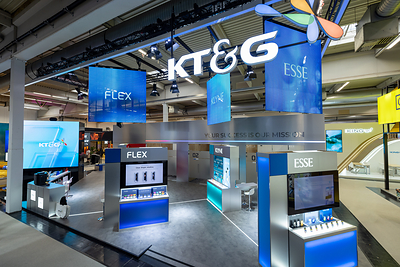
KT&G’s integrated exhibition booth showcasing its combustible cigarette and NGP products at InterTabac 2026 in Dortmund, Germany.

InterTabac is one of the most influential trade fairs in the global tobacco industry. This year's event brought together around 800 companies from more than 70 countries, with a wide range of products, including combustible cigarettes and cigars, as well as the latest industry trends showcased across 12 exhibition halls. The event also served as a platform for industry professionals from around the world to exchange market insights, expand distribution networks and explore new business opportunities.

KT&G significantly expanded its presence at this year's event, operating an exhibition booth approximately four times larger than the previous year. The space featured four themed zones organized by product category and brought together a diverse portfolio of products, including combustible cigarette brands such as 'ESSE' and 'BOHEM', as well as NGP, Vapor products, and nicotine pouches.

Throughout the event, KT&G held business meetings with global partners and buyers to discuss potential collaboration in key markets and explore new business opportunities. The company also engaged visitors through a variety of brand content and on-site programs, offering them an opportunity to experience KT&G's diverse brand portfolio.

'ESSE', KT&G's flagship global superslim brand, surpassed KRW 1 trillion in overseas sales last year. The brand is now sold in more than 90 countries and accounts for approximately one-third of global superslim cigarette sales. BOHEM, distinguished by its use of cigar leaf, is primarily sold across the Asia-Pacific and Latin American markets.

"InterTabac, the world's largest tobacco industry trade fair, provides an important platform to expand our global network and explore new opportunities across the industry," a KT&G official said. "Building on our participation in this year's event, we will continue to strengthen KT&G's presence in global markets."

KT&G, the manufacturer of global brand 'ESSE', is a leading Korean company with businesses spanning NGP (Next Generation Products), health functional foods and combustible cigarettes. As of the end of 2025, KT&G brands are sold in 140 countries worldwide.
Cision View original content to download multimedia:https://www.prnewswire.co.uk/news-releases/ktg-showcases-global-brands-at-intertabac-2026-the-worlds-largest-tobacco-industry-trade-fair-302886988.html


Other news

Extreme Preisspanne bei Diesel: Von 2,288 Euro in Südtirol bis knapp unter 2 Euro in Luxemburg

08.10.2026

Während die Dieselpreise in Teilen Italiens neue Höchststände erreichen, zeichnet sich in Luxemburg eine spürbare Entspannung ab – und in Deutschland profitieren Autofahrer nur eingeschränkt von Steuererleichterungen. In Südtirol kletterte der Dieselhöchstpreis in Bozen Medienberichten zufolge auf 2,288 Euro pro Liter und lag damit am Mittwoch über dem Durchschnitt auf den italienischen Autobahnen. Dort wurden im Schnitt 2,287 Euro pro Liter Diesel fällig. Im gesamtstaatlichen Vergleich ist Südtirol damit weiterhin Spitzenreiter bei den Preisen.

Auch in anderen italienischen Regionen zogen die Dieselpreise deutlich an. In Trient stieg der Selbstbedienungspreis auf 2,274 Euro pro Liter, ein Anstieg um 1,1 Cent binnen eines Tages. Die stärksten Preissprünge wurden jedoch nicht in den teuersten Regionen verzeichnet, sondern im Nordosten und im Westen des Landes: In Friaul verteuerte sich ein einmaliges Volltanken von 50 Litern Diesel um 1,25 Euro, in Ligurien um 1,20 Euro, im Latium um 1,15 Euro. Auf den Autobahnen wurden Tagesanstiege von bis zu zwei Cent je Liter registriert. Der Präsident der nationalen Verbraucherunion, Massimiliano Dona, wirft der Regierung in Rom vor, zu wenig gegen die Preisanstiege zu unternehmen, und warnt vor möglichen Folgen für die Inflation.

Parallel dazu zeigt sich in Luxemburg ein gegenteiliger Trend. Dort wird Diesel nach Angaben des Wirtschaftsministeriums ab Mitternacht um 6,2 Cent je Liter günstiger und kostet dann 1,995 Euro. Damit fällt der Preis unter die Marke von zwei Euro. Die Benzinsorten Super 95 und Super 98 bleiben stabil bei 1,837 Euro beziehungsweise 2,049 Euro je Liter. Auch Heizöl wird in Luxemburg billiger: Bei Abnahme von mindestens 1.500 Litern sinkt der Literpreis am Mittwoch ebenfalls um 6,2 Cent auf 1,477 Euro. Der Großherzogtum bewegt sich damit preislich klar unter dem Niveau vieler Regionen in Italien.

In Deutschland wiederum kommt eine bereits beschlossene Steuerentlastung für Autofahrer nur begrenzt an. In Sachsen-Anhalt senkte die Bundesregierung vor rund einer Woche die Steuern auf Kraftstoffe um 17 Cent pro Liter. Laut dem Portal Benzinpreis-blitz kostete Super E10 am Mittwochnachmittag im Landesdurchschnitt 2,12 Euro pro Liter und damit lediglich rund sieben Cent weniger als am Nachmittag vor Inkrafttreten des Rabatts. Der Dieselpreis lag bei 2,19 Euro pro Liter, rund 15 Cent unter dem Vorkrisenniveau. Die Entlastung erreicht damit nicht vollständig die angekündigte Höhe, zudem spielt laut den Erhebungen die Uhrzeit eine wesentliche Rolle: Je nach Tageszeit fällt der Vorteil für Verbraucher unterschiedlich aus.

Im europäischen Vergleich entstehen damit deutliche Preisunterschiede für Dieselverbraucher. Während Italien mit Rekordständen in Teilen des Landes und spürbaren Tagesanstiegen im Fokus steht, nutzt Luxemburg den Spielraum für Preissenkungen. Deutschland versucht, über Steuersenkungen gegenzusteuern, bislang mit begrenzter Durchschlagskraft an der Zapfsäule. Für Verbraucher bleibt das Umfeld volatil – und die Frage, in welchem Umfang staatliche Eingriffe und Marktbewegungen künftig tatsächlich im Portemonnaie der Autofahrer ankommen.