Jockey Club concludes landmark 10th anniversary of PBC with Gala Dinner featuring delegates from around the world to celebrate a decade of global dialogue
HONG KONG, Sept. 8, 2026 /PRNewswire/ -- The Hong Kong Jockey Club concluded the landmark 10th anniversary and fifth edition of its PBC forum at West Kowloon Cultural District today (8 September). Convened over two days by the Club's Charities Trust in association with the Institute of Philanthropy (IoP), PBC 2026 featured more than 80 eminent speakers and over 2,000 delegates from around the world. Under the central theme of "Leaping for Impact", the forum brought together leaders from the philanthropic, sports, business, government, academic and social sectors.
Thematic discussions over the two days addressed pressing social issues including health, the well-being of older adults, urban poverty alleviation, heritage conservation, youth positive trajectory development, climate resilience and inclusive employment. Interactive Impact Studios, Co-Learning Workshops and other extended programmes further bridged visionary ideas with practical implementation, examining how meaningful social impact can be achieved on the ground.
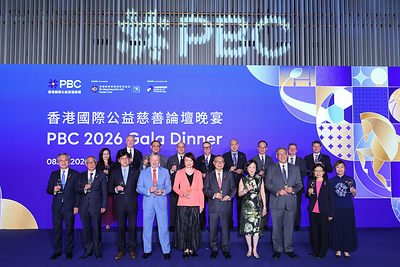
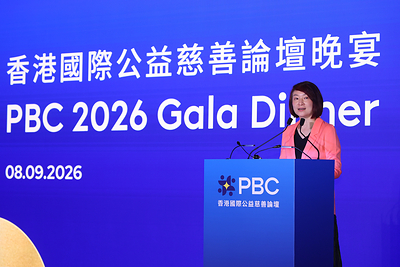
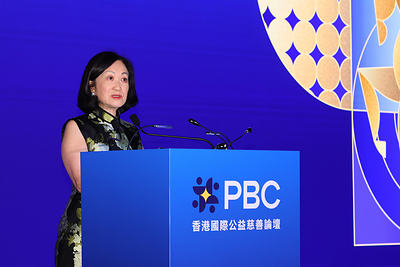
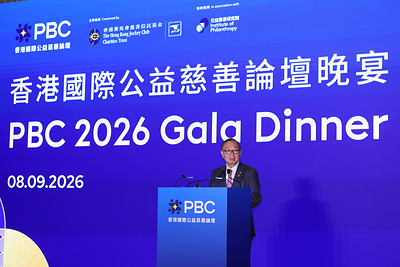
To mark the forum's conclusion and celebrate a decade of global dialogue, a PBC 2026 Gala Dinner was held at the Hong Kong Palace Museum. It brought together delegates from the Chinese Mainland and across the world including foundation leaders, government officials, tertiary institution representatives and community leaders. Among the distinguished attendees were Dr the Hon Starry Lee, Member of the Standing Committee of the National People's Congress and President of the Legislative Council of the HKSAR; The Hon Mrs Regina Ip, Convenor of the Non-official Members of the Executive Council of the HKSAR; Club Chairman The Hon Martin Liao; Club Deputy Chairman and IoP Chairman Lester Huang; Club Stewards; Club CEO and IoP Director Winfried Engelbrecht-Bresges; and other members of the Club's Board of Management.
Dr the Hon Starry Lee, Member of the Standing Committee of the National People's Congress and President of the Legislative Council of the HKSAR, said at the Gala Dinner that, over the past decade, the PBC forum had not only borne witness to the development of philanthropy, but had also promoted exchange and collaboration among the Chinese Mainland, Hong Kong and the international community. Looking ahead to the country's 15th Five-Year Plan, she noted that philanthropic models that take a long-term perspective and place greater emphasis on capacity building and talent development would become increasingly important.
The Hon Mrs Regina Ip, Convenor of the Non-official Members of the Executive Council of the HKSAR, said: "Meaningful achievement is built through clarity of purpose, discipline, resilience, honest self-assessment, and an unyielding determination to improve. Those same qualities are becoming increasingly essential in philanthropy, and The Hong Kong Jockey Club is especially well placed to lead this conversation because it sits at the unique intersection of sport, public purpose and philanthropy at scale."
Club Chairman The Hon Martin Liao expressed his profound gratitude to all speakers, panellists, moderators and participants of PBC 2026 for bringing their remarkable range of experience and perspectives to the forum. He praised the progress that PBC has made over the past decade in addressing prevailing social challenges and inspiring cross-sector and cross-regional partnerships, to its position today as one of the largest assemblies of the global philanthropic community worldwide.
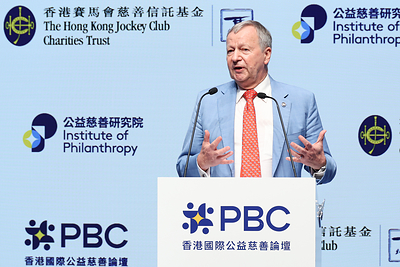
Winfried Engelbrecht-Bresges, the Club's CEO and IoP Director, delivered the forum's closing remarks, echoing insights from forum speakers and reflecting on the sector's evolving journey. "If there is one lesson that has emerged consistently over the past two days, it is that meaningful impact does not happen by accident. It requires vision, discipline and commitment. But above all, it requires collaboration." He added: "No organisation, foundation, government or business can address today's challenges alone. Partnerships are key, but equally important is finding the right partners: those who bring complementary strengths, share our purpose are committed to achieving meaningful outcomes together."
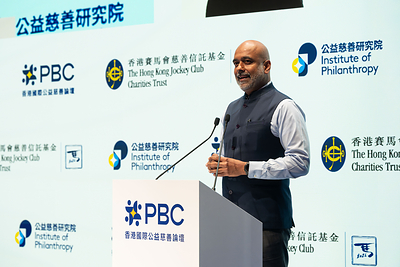
Earlier today, the opening keynote address was delivered by Hari Menon, President of Global Growth & Opportunity at the Gates Foundation. Entitled "The New Growth Agenda: Philanthropy's Role in Expanding Opportunity for All", it examined the catalytic role of philanthropy in enabling more people to contribute to and benefit from economic growth.
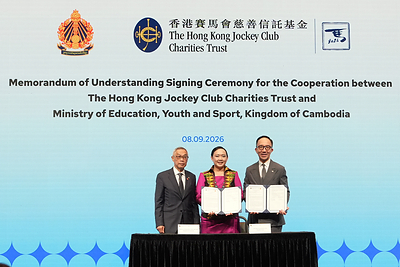
As part of the Club's ongoing efforts to promote education and development equity, and following the adoption and adaptation of the CoolThink@JC curriculum in Cambodian primary schools earlier this year, an MOU on early childhood education and development was signed today. Witnessed by Club Steward Jackson Woo, the MOU was signed by Dr Gabriel Leung, Club Executive Director, Charities and Community, and H.E. Dr Kim Sethany, Permanent Secretary of State of Cambodia's Ministry of Education, Youth and Sport, reaffirming the shared commitment to strengthening development foundations and better life trajectories for children.
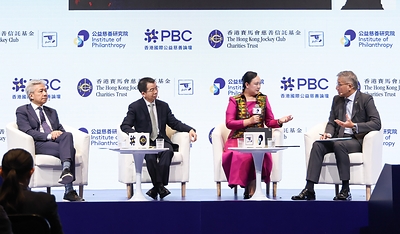
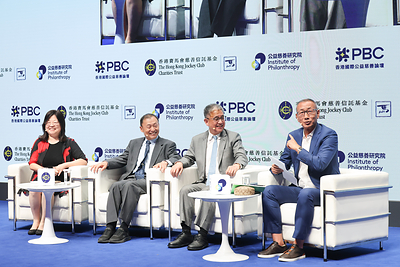
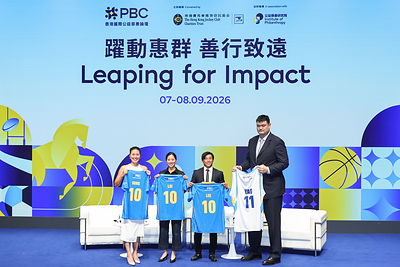
The forum's closing plenary featured an intergenerational dialogue between a sports leader-turned-philanthropist and aspiring young athletes who want to drive change. Moderated by Yao Ming, Founder and Chairman of the Yao Foundation, the session examined how athletes can broaden their impact and how personal growth can translate into leadership and community building. The speakers were Yvette Kong, Founder and Chief Executive Officer of Arelyx and Olympic swimmer; Jacqueline Lai, Hong Kong, China equestrian team rider and Asian Games medallist; and Cado Lee, two-time Asian Games gold medallist and a Hong Kong, China Rugby Sevens player.
In line with this year's theme, The Bridgespan Group unveiled a new report examining what distinguishes family giving in Asia and how the world's wealthiest families approach philanthropy. Supported by IoP, The Rockefeller Foundation and the Gates Foundation, the research explores the relationship between family, business and philanthropy across the region. Separately, Bridgespan's latest corporate giving research found that The Hong Kong Jockey Club and its Charities Trust remain the leading corporate donor in Asia and the eighth largest globally, with an annual average of approved donations of US$774 million from 2020 to 2024.
Initiated in 2016, PBC has served as a flagship platform for global philanthropic thought leadership and cross-sector collaboration, engaging some 10,000 participants and more than 380 speakers from over 40 countries and regions throughout the past decade.
The Club's support for PBC 2026, like all of its charity and community initiatives, is made possible by its unique value creation model through which racing and wagering generate tax contributions, charity support and employment opportunities for the community.
Photos can be downloaded from the website of The Hong Kong Jockey Club (https://corporate.hkjc.com/en-us/news-and-publications/corporate-news). |
###
 View original content to download multimedia:https://www.prnewswire.co.uk/news-releases/jockey-club-concludes-landmark-10th-anniversary-of-pbc-with-gala-dinner-featuring-delegates-from-around-the-world-to-celebrate-a-decade-of-global-dialogue-302872525.html