Europe's Energy Transition Enters a New Era: Why Flexibility Matters More Than Ever
MUNICH, Sept. 30, 2026 /PRNewswire/ -- Europe's power market is sending two contradictory signals this summer. Renewable electricity is becoming so abundant that prices are falling below zero. Yet extreme heat is pushing power prices to levels more commonly associated with winter. Behind both trends lies the same challenge: Europe's power system is entering an era where dynamic balancing, precision dispatch and system resilience are becoming as important as generation itself.

Two extremes, one market
This past summer put the continent's changing electricity system under new pressure.
As temperatures climbed, demand for cooling surged just as parts of the generation fleet strained under the heat. High river temperatures and low water levels forced some nuclear plants to reduce output. Low wind conditions and reduced thermal plant efficiency tightened supply further.
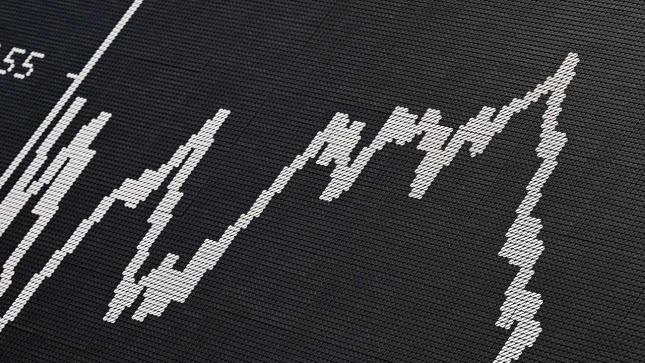
The result was an unusually tight summer power market, with electricity prices rising to levels more commonly seen in winter. In Germany, day-ahead prices reached around €210/MWh during periods of extreme heat—levels typically seen in winter, according to LSEG data cited by Reuters.
Yet only hours later, the same markets faced the opposite problem: too much electricity.
Negative prices have become increasingly common as solar and wind penetration rises faster than the power system's ability to absorb, shift, and transmit renewable generation. According to the International Energy Agency, negative-price hours accounted for around 6% of the year in several major European markets in 2025, including Germany, France, Spain, and the Netherlands. Germany alone recorded 573 hours of negative wholesale prices.
Curtailment tells the same story. In May 2026, an estimated 1.28 TWh of solar generation was curtailed in Germany, and more than 2.4 TWh in Spain, as grids struggled to accommodate output during periods of abundant sunshine.
The apparent contradiction points to a deeper shift: Europe does not simply have a generation problem. It has a timing, location and flexibility problem.
From Generation to Dynamic Balancing
The challenge is no longer simply whether enough electricity can be generated. It is whether electricity is available when and where it is needed.
At midday, abundant solar generation can push wholesale prices toward zero or below. Hours later, solar output falls while evening demand remains high, creating a very different price signal. Extreme weather widens the gap further by simultaneously increasing demand and constraining conventional generation.
For renewable asset owners, value is therefore increasingly determined not only by how much electricity an asset generates, but by how effectively that electricity can be managed, shifted and dispatched.
Storage: From Energy Shifting to System Support
Battery storage is emerging as a key tool for balancing increasingly variable power supply and demand across Europe.
By absorbing electricity during periods of oversupply and dispatching it when demand and prices rise, batteries can reduce curtailment while improving the value of renewable generation. Increasingly, they are also expected to provide frequency response, capacity, and grid-support functions.
But not all storage is built for this new reality. The next generation of utility-scale systems must handle multiple durations, deliver high round-trip efficiency and provide the grid-forming capabilities required by evolving European grid codes. Just as importantly, these systems must be deployable at scale and commissioned efficiently.
This principle has shaped the development of Sungrow's PowerTitan series, which brings together battery technology, power conversion, thermal management and grid-support capabilities within an integrated platform.
From Flexibility to System Resilience
The value of fast-responding storage is already visible in Europe. In December 2023, a trip on the IFA1 interconnector between the UK and France resulted in the loss of around 1 GW of imported power, sending system frequency down to 49.3 Hz. Multiple hundred-megawatt-scale grid-connected battery systems operated by Sungrow in the UK responded within one second, providing frequency support and helping the system return to the normal frequency range within five minutes.
The episode illustrates a broader shift: storage is no longer only an energy-shifting asset. It can also become part of the power system's resilience layer, responding in the seconds that matter most.
From Technology to Scalable Delivery
As storage projects grow in scale, however, technology must be matched by execution.
At the 100 MW/331 MWh Bramley project in the UK, the PowerTitan 2.0 BESS supported the project's progression from grid energisation to commercial operation in just two weeks. At a much larger scale, Sungrow's 7.8 GWh energy storage project in Saudi Arabia moved from production to deployment in two months and was connected to the grid in 2025. The project demonstrates that grid-forming storage can be manufactured, delivered and commissioned not only as an individual asset, but at multi-gigawatt-hour scale.
Together, these projects build the technology, operational experience and delivery foundation behind the latest generation of the platform: PowerTitan 3.0.
PowerTitan 3.0: Engineering for the Next-Generation Grid
Built for applications ranging from 2 to 8 hours, PowerTitan 3.0 packs 7.14 MWh of battery capacity into a single 20-foot container, paired with a 1.78 MW power conversion system. Its SiC-based PCS enables system-level round-trip efficiency of up to 92%, minimizing energy loss during daily cycling. And with integrated grid-forming capabilities, it is engineered to meet evolving European grid codes that now prioritize stability alongside energy shifting.
"The next phase of Europe's energy transition is not simply about generating more renewable electricity. It is about making that electricity available at the right time, in the right place and in the right form. This is where flexible energy storage can create new value for both renewable assets and the wider power system," said Javier Izcue Elizalde, Vice President Europe at Sungrow. "This year, Sungrow estimates delivering 10 GWh of PowerTitan 3.0 across Europe."
A Market Moving Toward Flexibility
The shift is already visible in deployment figures. According to SolarPower Europe's European Battery Market Outlook 2026–2030, Europe installed around 36 GWh of new battery storage in 2025, taking operational capacity above 100 GWh. SolarPower Europe expects annual installations to exceed 50 GWh in 2026 and reach 138 GWh by 2030, with utility-scale storage becoming the key growth engine.
Europe does not simply need more renewable electricity. It needs a power system capable of moving that electricity across time, responding to increasingly extreme conditions, and extracting more value from every megawatt-hour generated.
In a market where prices can swing from below zero to €210/MWh within hours, flexibility is no longer a backup option. It is becoming a core source of value—and a new source of value for the energy transition.
 View original content to download multimedia:https://www.prnewswire.co.uk/news-releases/europes-energy-transition-enters-a-new-era-why-flexibility-matters-more-than-ever-302894290.html